
Gara Djebilet Mine: A Strategic Structuring Project
The Gara Djebilet project is one of the largest mining and structuring projects in Algeria’s history. It aims to develop and exploit one of the world’s largest iron ore deposits, with estimated reserves exceeding 3.5 billion tons. The mine is located about 130 kilometers southeast of Tindouf Province.
Along with the Mechri Abdelaziz mine, the project represents nearly 90% of Algeria’s untapped national iron ore potential. It is considered a true lever for transforming Algeria from an iron-importing country into an iron-exporting one, thanks to an integrated vision supported by strong presidential backing and modern strategic infrastructure.
The Gara Djebilet deposit consists of oolitic sedimentary iron ore, distributed across three main blocks (West, Central, and East Gara Djebilet). The ore body is semi-horizontal, with a thin overburden and a thickness ranging between 15 and 30 meters, making it suitable for large-scale open-pit mining at competitive costs. Since its discovery in 1952, the mine has undergone numerous studies and exploration campaigns, including 3D modeling and the drilling of hundreds of boreholes, resulting in a precise and comprehensive database on its geological and mining characteristics.
The main logistical constraint that long challenged the project has been overcome through the construction of the western mining railway line, approximately 950 kilometers long (Béchar–Tindouf–Gara Djebilet). This line directly connects the mine to the national rail network, industrial complexes, and ports. The project aims to reach an annual production of 50 million tons of iron ore, to be converted into about 25 million tons of marketable products, meeting domestic demand and exporting the surplus. It is an integrated project covering extraction, processing, transport, and industrial valorization.
The exploitation of the Gara Djebilet iron mine is part of a comprehensive sustainable development approach that integrates economic, environmental, and energy dimensions. This includes reliance on renewable energy to power the project, particularly photovoltaic solar plants with a total capacity of about 200 MW in Tindouf Province, in addition to an 80 MW solar plant project in the municipality of Abadla, Béchar Province.
The project also includes advanced environmental measures such as recycling industrial wastewater, rationalizing water use, and managing industrial waste, thereby reducing the environmental footprint of mining activities.
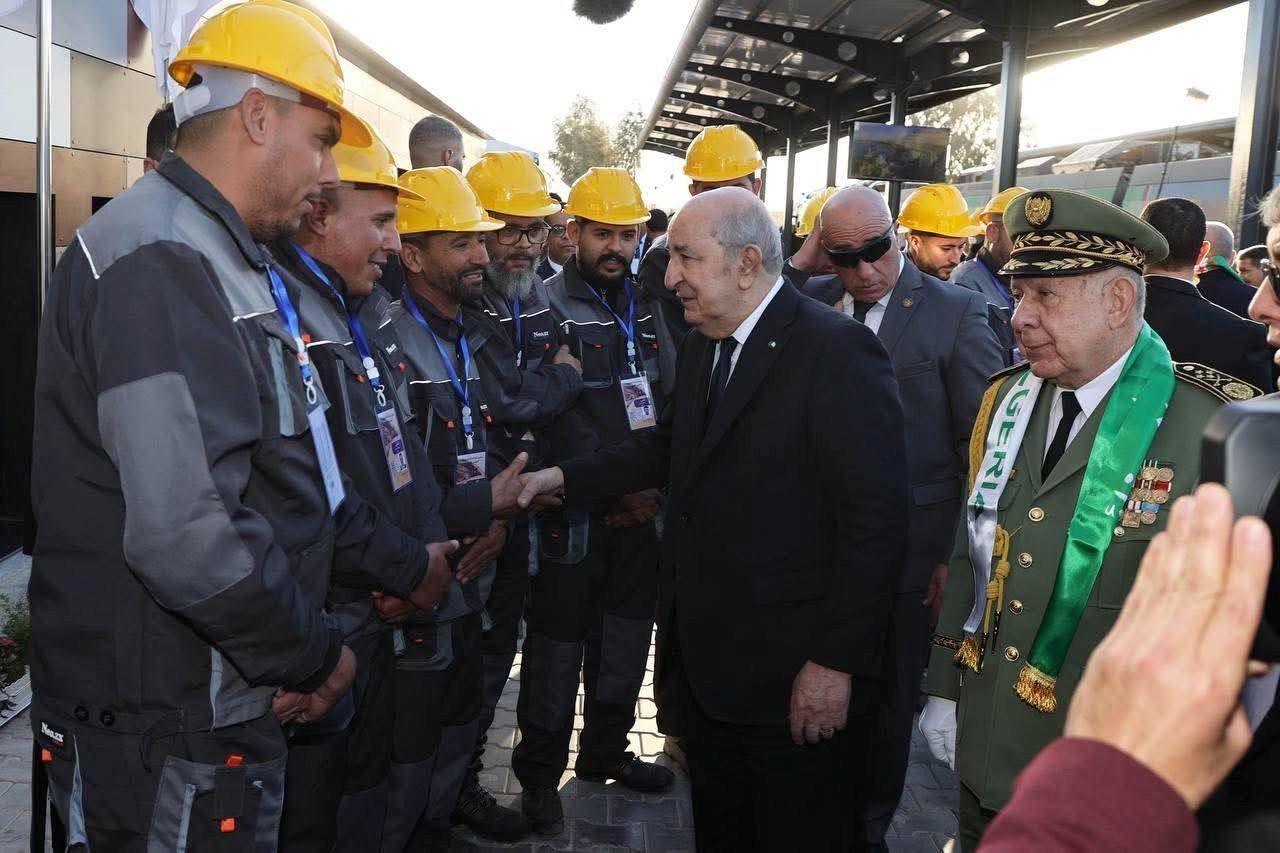
This reflects the State’s commitment to establishing a sustainable development model that supports the energy transition and strengthens local development and the national economy. It should be recalled that these ceremonies fall within the implementation of the instructions of the President of the Republic, which call for the start of exploiting iron ore extracted from the Gara Djebilet mine during the first quarter of 2026, and for the delivery of the western mining railway line.
This will enhance the valorization of national mining resources and consolidate the strategic role of the Gara Djebilet project in supporting the iron and steel industry and achieving national economic development